

Visual Identity
05.
System
SECTIONS CONTENT
5.0
INTRO
Integrating Brand Elements for Consistency
The system outlines how all elements of the Contentjet identity work together to create a seamless, consistent brand experience. It ensures that each element, from logos to typography and colors, is used correctly to communicate the brand's values and maintain visual harmony across various touchpoints.
5.1
Icons & Illustrations
Our visual system distinguishes clearly between human representation and conceptual communication. Icons and illustrations serve specific, strategic purposes within our brand architecture.
Icon System:
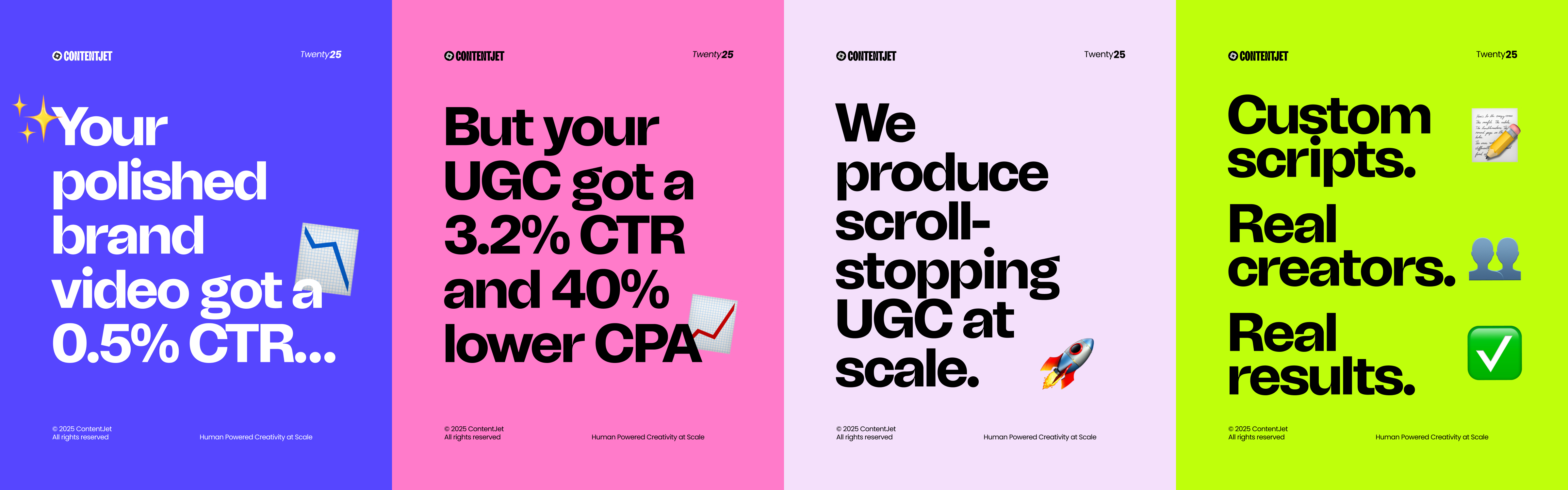
Our 3D rendered icons feature vibrant gradient objects like rockets, targets, and performance symbols that represent concepts, actions, and ideas. These are never used to represent people but rather to symbolize growth, precision, achievement, and other strategic concepts. Icons function as supporting visual elements, typically used as small accent pieces or stickers in corners of layouts.
Human Representation:
People are always shown through authentic photography, never illustrations. Our photography features real creators and production professionals captured in actual audiovisual production environments. These photographs are prominently displayed as central visual elements, showcasing the human creativity and expertise behind our UGC campaigns.
Hierarchy:
Photography takes visual precedence as hero imagery, while icons serve as secondary supporting elements. This creates a clear distinction between our human-centered approach to creativity and the conceptual framework that supports our methodology.






5.2
Layout
Proper layout and integration of the logo with illustrations ensure a balanced and harmonious visual identity. This section provides guidelines on how to effectively combine the logo with illustrations to enhance the overall design.
Placement:
The Contentjet logo should be prominently displayed with adequate clear space to ensure visibility and impact. Illustrations can be used around or alongside the logo, but they should complement rather than overshadow the brand's primary mark.
Integration
When using illustrations with the logo, ensure that the combination looks balanced and cohesive. Illustrations should enhance the logo and support the brand identity without detracting from its prominence.


examples


5.3
Scale
Scaling guidelines ensure that illustrations maintain their visual effectiveness across different sizes, from small icons to large-format graphics.
Small Scale:
Illustrations should remain clear and effective when scaled down for use in digital interfaces or small print formats. Ensure that details are preserved and the illustration remains recognizable.
Medium Scale:
Illustrations used in website sections, presentations, or social media should maintain a balanced and engaging appearance. The scale should be appropriate for the medium, ensuring visual impact and coherence.
Large Scale:
For large-format applications like banners or conference graphics, illustrations should scale without loss of quality. Large-scale visuals should still align with the brand's style and maintain visual interest.
5.4
Colorful Grid System
Our grid system ensures that visual elements maintain their effectiveness across different applications and formats.
Placement:
The Contentjet logo should be prominently displayed with adequate clear space to ensure visibility and impact. Visual elements can be used around or alongside the logo, but they should complement rather than overshadow the brand's primary mark.
Integration
When using graphics with the logo, ensure that the combination looks balanced and cohesive. Visual elements should enhance the logo and support the brand identity without detracting from its prominence.

Final thoughts
A well-defined visual system ensures that all elements work together harmoniously, reinforcing Contentjet's identity across various applications. By following these guidelines, we create a cohesive and engaging brand presence that supports our messaging and appeals to our audience.